Build performant embedded AI with Aidge

Aidge optimises and deploys AI models on resource-constrained platforms and helps unlock critical applications: real-time performance, energy efficiency, minimal memory footprint and reliability. Aidge is used to develop many concrete use cases in the most demanding industrial sectors. Browse below a selection of use cases.

Ultra-fast object detection
  • Computer Vision
  • Optimization
  • Tensor Decomposition

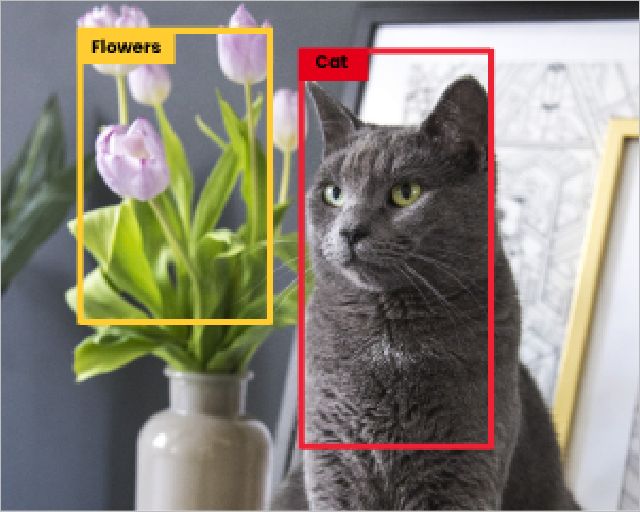
Ultra-fast object detection

The YOLO family of models has significantly advanced object detection and has become a standard for many real-time vision applications. However, embedded system constraints can limit their efficient deployment. Aidge offers a deep neural network optimization method based on tensor decomposition, factorizing large weight tensors into sequences of lower-rank tensors. This structural transformation significantly reduces the number of parameters and the associated computation, memory and energy costs while improving execution time. In practice, this method can achieve up to 40% compression, around 50% faster inference, and energy savings close to 40%.

Contributors : CEA

Read more
Safety and certification: AI for aeronautical systems
  • Aeronautics
  • Certification
  • Safety
  • ACETONE

Safety and certification: AI for aeronautical systems

Thanks to its ACETONE plugin, Aidge offers a certifiable solution for integrating AI into critical aeronautical systems such as ACAS-Xu (embedded collision avoidance controller) or vision-based landing. The plugin ensures that the generated C code is fully traceable and predictable, with a guaranteed Worst-Case Execution Time. This addresses the main safety requirements of such systems.

Contributors : ONERA / CS Group

Read more
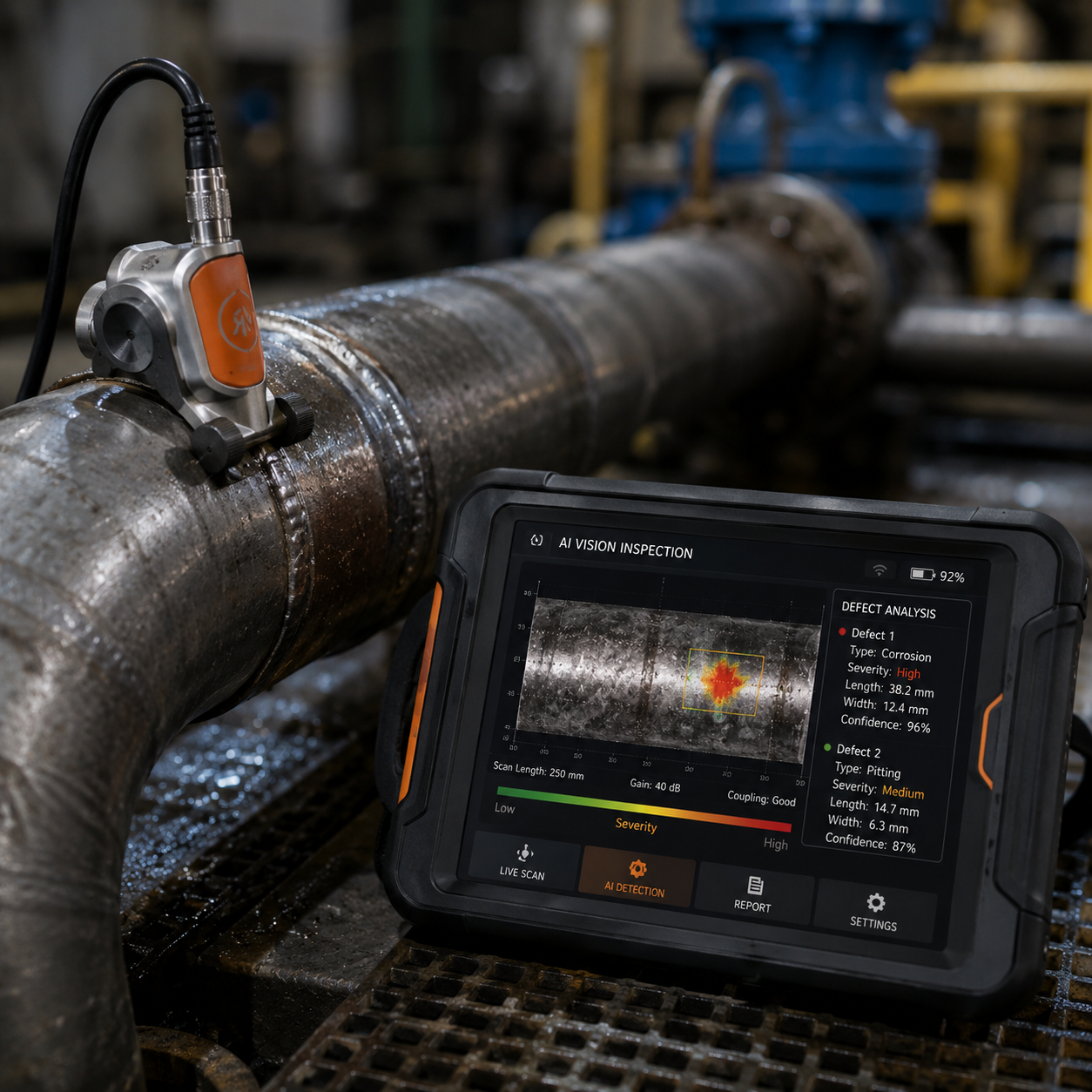
Smarter sensors: real-time nuclear monitoring
  • Nuclear
  • Sensors
  • Real-time
  • C++

Smarter sensors: real-time nuclear monitoring

Aidge offers superior real-time inference for neutron-gamma discrimination in nuclear applications, achieving an average inference time of 20.1 μs on an NXP i.MX8M Plus processor. This makes it at least 41% faster than competitors such as TensorFlow Lite, Apache TVM and ONNX Runtime, thanks to efficient C++ code generation.

Contributors : CEA

Read more
Hardware design
  • ASIC
  • Co-design
  • MobileNet
  • 4-bit Quantization

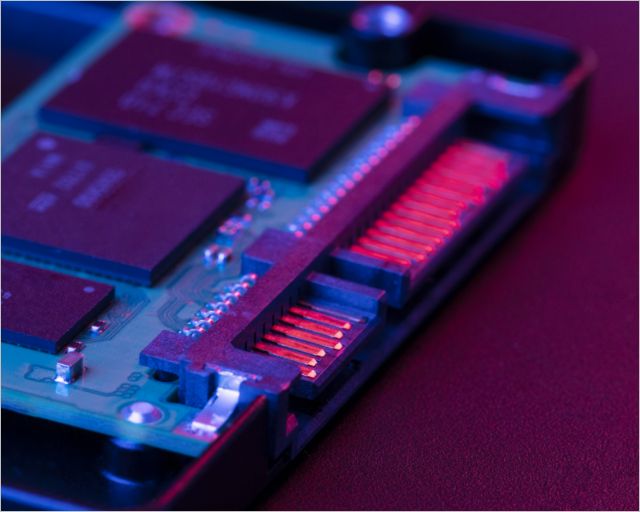
Hardware design

Aidge plays a key role in designing innovative AI hardware such as ASICs. In the proposed approach, the part of the neural network dedicated to image feature extraction is hardwired directly into the silicon, while the remaining layers are optimised for the target application. Aidge enables this hardware/software co-design, in particular through efficient 4-bit quantization of a MobileNet v1 feature extractor. This optimisation reduces the required silicon area up to 8 times. Taken together, these innovations have a major impact on the industry, with energy consumption reduced by a factor of 1,000 compared with current market standards and low latency, enabling HD video processing on embedded systems.

Contributors : CEA

Read more
Passive acoustic monitoring
  • Bioacoustics
  • AudioMoth
  • Graph Tiling
  • Edge AI

Passive acoustic monitoring

Aidge enables the creation of extremely lightweight models for passive acoustic monitoring of shearwaters (seabirds) by performing real-time sound classification directly on embedded devices. Deployment on AudioMoth, a platform with extremely strict memory constraints (only a few kilobytes of RAM), is made possible by Aidge's model topology optimisation techniques, in particular graph tiling, which reduces peak memory footprint by around 25% and allows the model to run within the device's limited resources.

Contributors : BioPhonia

Read more
3D-stacked image sensor
  • Image sensor
  • 3D-Stacked
  • CMOS
  • Smart sensing

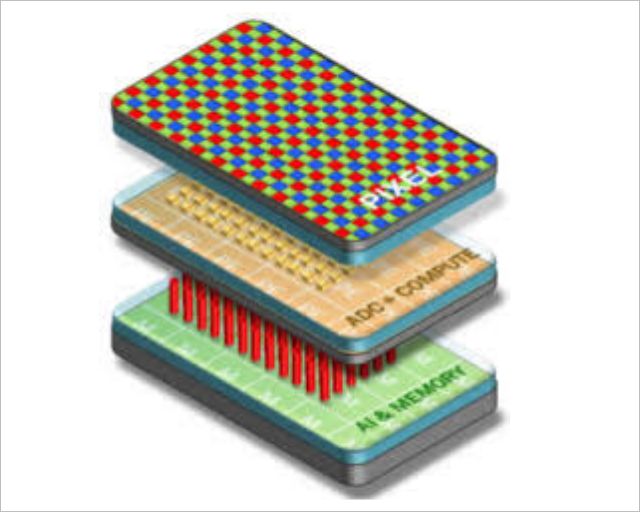
3D-stacked image sensor

Aidge is used as a software stack to program and deploy neural networks on J3DAI, an ultra-compact deep neural network accelerator embedded in a 3D-stacked CMOS image sensor for smart sensing applications. Thanks to its accelerator programming and post-training quantization capabilities, Aidge enables efficient inference directly on the sensor for tasks such as classification and segmentation, under strict energy, memory and silicon area constraints. The proposed architecture demonstrates significant hardware efficiency, achieving up to 3x fewer MAC units and 3x less silicon area compared with state-of-the-art designs, illustrating how Aidge supports the deployment of AI models on highly optimised embedded hardware.

Contributors : ST Microelectonics, IRT NanoElec and CEA

Read more

Follow all the project news